Sales Programs
Sales Program Implementation and Management
Managing the sales pipeline in detail is a top priority, and we approach it with a keen focus on aligning our sales reps' strategies with the customer's needs, pain points, and goals. We understand that successful selling goes beyond pushing products; it's about offering tailored solutions that address the specific challenges and aspirations of each customer. To achieve this, we have implemented rigorous training programs for our sales team, emphasizing active listening and empathy during customer interactions. Through ongoing coaching and role-playing exercises, our reps learn to uncover and understand the unique pain points and goals of each prospect. Armed with this knowledge, our sales professionals can effectively position our products or services as valuable tools to overcome challenges and achieve desired outcomes. By managing the pipeline closely and ensuring our reps are well-versed in customer-centric selling techniques, we foster stronger relationships with clients, leading to increased satisfaction and sustainable business growth.
Centric Sales Methodology
Customer-centric selling is important when selling SaaS on a subscription basis and here's why:
Keep Customers for the Long Haul: SaaS is a subscription, so it's smart to focus on keeping customers happy for the long term. This means understanding what they need and making sure they're satisfied, which increases the chances they'll stick around.
Match Your Product to Their Needs: By putting the customer first, you can tweak your SaaS offering to match what each customer really needs. This way, you're giving them exactly what they're looking for.
Be Flexible to Their Needs: SaaS can be flexible to fit what customers want. Being customer-centric means listening to their feedback and adjusting your product to fit their changing needs. This keeps them happy and sticking with your service.
Avoid Losing Customers: In the subscription world, losing customers (churn) is bad for business. By understanding what customers want and consistently providing value, you can stop them from looking elsewhere.
Spot Opportunities to Sell More: If you're focused on customers, you can find chances to sell them more stuff (cross-selling) or convince them to upgrade their subscription (upselling). It's all about understanding their business goals and suggesting things that make sense for them.
Stand Out from the Crowd: Everyone's selling SaaS, so being customer-centric makes you stand out. Customers like when you get their business, and it can set you apart from the competition.
Get Happy Customers to Spread the Word: Happy customers become your biggest fans. When they talk positively about your product, it brings in new customers and builds a good reputation for your brand.
Use Data to Make Smart Choices: Focus on collecting and analyzing customer data. This helps you understand how they use your product and guides decisions on product improvements, marketing, and support.
Tell Stories That Resonate: Sharing stories about similar businesses in your industry helps customers see real-world examples. It makes your product relatable and shows how it can solve their problems, making the whole customer experience more engaging.
Defining Sales Stages
Building specific, measurable sales stages for the sales team is crucial for several reasons:
Clarity and Alignment: Clearly defined sales stages provide a common understanding among team members about where a prospect stands in the sales process. This ensures that everyone is on the same page and working towards common goals. It helps in aligning the efforts of the sales team with the overall business objectives.
Effective Communication: Well-defined sales stages facilitate effective communication with both internal teams and external customers. Internally, it helps sales managers monitor and guide their teams, while externally, it enables transparent and structured communication with prospects. This clarity reduces confusion and boosts trust in the sales process.
Progress Tracking: Specific and measurable sales stages allow for easy tracking of progress. By knowing where each prospect is in the sales pipeline, sales teams can identify bottlenecks, allocate resources efficiently, and make data-driven decisions to optimize the sales process.
Customized Approach: Different prospects may have varying needs, concerns, and timelines. Specific sales stages allow sales teams to tailor their approach based on the prospect's position in the sales cycle. This customization increases the likelihood of meeting individual customer requirements and closing deals successfully.
Predictive Analysis: A well-structured sales process enables the collection of data at each stage. This data can be analyzed to identify patterns and trends, leading to predictive insights. Understanding the typical duration and progression at each stage aids in forecasting sales, setting realistic targets, and improving overall business planning.
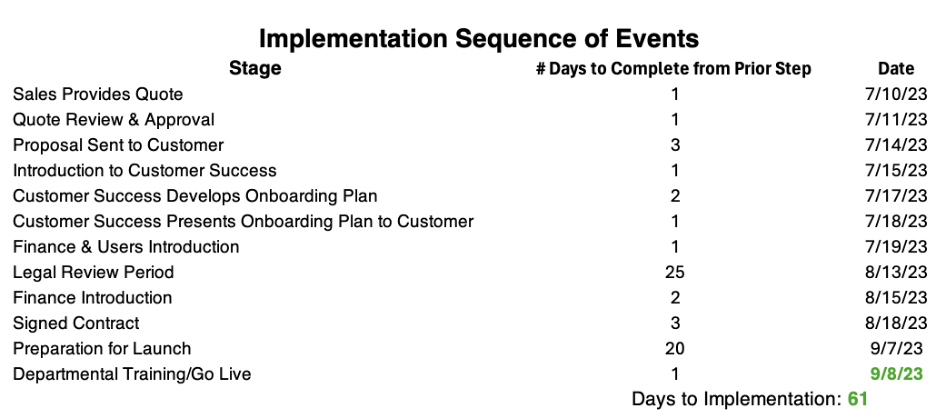
Now, incorporating a Sequence of Events and an ROI Guide enhances the customer experience:
Sequence of Events:
Clearly outline the steps from initial contact to the final purchase and implementation.
Provide a timeline or milestones that help the customer understand the expected timing of each stage.
Communicate clearly about what actions will be taken by the sales team and what involvement is expected from the customer at each step.
This sequence helps manage customer expectations, reduces uncertainty, and establishes a structured roadmap for a successful partnership.
Example
ROI Guide:
Clearly articulate the value proposition of your product or service and how it directly addresses the customer's pain points.
Provide a detailed breakdown of the return on investment (ROI) that the customer can expect, including both tangible and intangible benefits.
Illustrate how the product or service will contribute to cost savings, revenue growth, or efficiency improvements for the customer.
Offer case studies, testimonials, or relevant data that support the ROI claims.
This guide helps customers justify the cost of the purchase internally, making it easier for them to secure budget approvals.
In conclusion, a well-structured sales process with specific stages, a clear sequence of events, and a robust ROI guide not only benefits the sales team but also enhances the customer experience by providing transparency, building trust, and helping customers make informed decisions. We have a defined set of sales stages that have been developed and are customized based on the organization’s individual needs.
Sales Program Hiring Planning
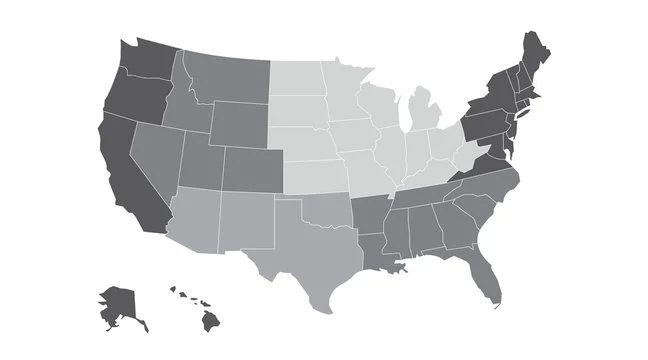
At the core of our sales program planning is a comprehensive understanding of our ideal customer profile. We begin by meticulously analyzing our target market, identifying key demographics, pain points, and needs. With this information in hand, we strategically distribute accounts to ensure the best coverage and alignment with the solution(s). This could be by industry, vertical, title/persona, territory, etc. The next step involves determining whether a traditional territory model suits our business or if an alternative approach would be more effective. Once the structure is defined, we leverage the expertise of our sales development team to generate valuable opportunities within each assigned territory. These opportunities serve as a robust pipeline for potential sales. With a flourishing pipeline, we then proceed to recruit and onboard the best-suited sales representatives who can adeptly manage their territories and capitalize on the groundwork laid by the sales development team. This methodical approach ensures that our sales representatives can confidently step into their roles with a strong foundation to build upon, optimizing their chances of success in meeting the needs of our valued customers.
Sales & Sales Development Alignment
We have implemented a specific, well-defined process to ensure seamless alignment between Sales Development Representatives (SDRs) and Account Executives (AEs). This process begins with SDRs scheduling qualified meetings and sending out personalized calendar invites, highlighting the meeting's purpose. The handoff to AEs is carefully organized, with comprehensive documentation of all qualification criteria and pertinent notes recorded in our CRM for future reference.
To foster effective communication and knowledge transfer, SDRs and AEs engage in proactive discussions ahead of each meeting. This ensures that the AE is fully equipped with the necessary background information and can avoid redundant questions, optimizing their engagement with the prospect.
Furthermore, our SDRs take the lead in outlining a tailored presentation strategy for each qualified meeting. While we have standardized pitch decks, our reps understand the importance of personalization to meet the prospect's unique needs. In cases where the information is intricate, the AE validates the data collected by the SDRs and adapts the presentation to illustrate the proof of concept convincingly.
In situations where the meeting requires the involvement of a solutions architect or sales engineer, our sales representatives step up as quarterbacks or point guards, expertly coordinating and allocating roles and responsibilities among the team members. This defined process ensures that SDRs and AEs work cohesively, maximizing the potential of every qualified meeting and strengthening our overall sales performance.
Developing Ideal Sales Slides
Using a defined sales presentation across all members of a sales team is crucial for several reasons, primarily focused on tracking effectiveness and ensuring consistency.
Consistency in Messaging: A standardized sales presentation ensures that all members of the sales team convey the same core message to potential customers. Consistency in messaging builds a strong and unified brand image, reducing the chances of confusion or conflicting information.
Measurable Effectiveness: Employing a uniform presentation allows leadership to track the effectiveness of the sales pitch. By using common metrics and key performance indicators (KPIs), leaders can analyze how well the presentation resonates with customers, identify successful strategies, and make data-driven adjustments for continuous improvement.
Quality Control: A standardized presentation provides an opportunity for leadership to maintain quality control. By having a consistent framework, sales leaders can monitor and ensure that the team is adhering to company standards, presenting accurate information, and meeting compliance requirements.
Training and Onboarding: A uniform sales presentation streamlines the training and onboarding process for new sales representatives. New hires can quickly learn and adopt the standardized pitch, enabling them to become productive more efficiently. It also facilitates knowledge sharing and collaboration among team members.
Customer Experience: Consistency in the sales presentation contributes to a positive customer experience. When customers receive a coherent and well-structured pitch from any member of the sales team, it fosters trust and credibility. A consistent experience enhances the overall perception of the brand and its offerings.
Data-Driven Decision-Making: Using the same presentation allows leaders to gather reliable and comparable data. This data can be analyzed to identify patterns, successful tactics, and areas for improvement. It enables leaders to make informed decisions based on real performance metrics, driving the team towards achieving desired outcomes.
Alignment with Goals: A standardized presentation ensures that the sales team aligns with the overall goals and objectives of the organization. Leadership can easily communicate strategic priorities and ensure that every sales interaction is geared towards driving the desired outcomes.
In summary, utilizing a consistent sales presentation not only enables effective tracking of performance but also promotes cohesion, reliability, and a positive customer experience. It supports leadership in making informed decisions and guides the sales team towards achieving the organization's overarching goals. recognizing that the sales landscape is dynamic and consumer preferences evolve, our organization is committed to a continuous improvement process for our sales presentations. We understand that staying relevant requires adapting to changing market dynamics. With a systematic approach to development, we regularly analyze customer feedback, industry trends, and sales performance data. This iterative process ensures that our sales deck remains finely tuned to meet the evolving needs of our audience. By identifying and incorporating the most effective components, we empower sales teams to consistently deliver impactful presentations that drive successful outcomes, fostering long-term relationships with our customers and contributing to the overall growth and success of business.
Account Mapping & Intelligence
Training sales representatives to effectively map out target accounts for penetration and expansion opportunities involves a strategic combination of leveraging sales tools like ZoomInfo and staying ahead of competitors through intelligence, including intent data and scoops. Here's an overview of the process:
Understanding the Sales Tools:
Provide comprehensive training on the features and functionalities of sales tools, with a focus on ZoomInfo.
Ensure sales reps are proficient in navigating and extracting relevant information from the tool.
Defining Target Account Criteria:
Clearly articulate the criteria for identifying target accounts based on factors such as industry, company size, and geographic location.
Teach sales reps how to use ZoomInfo filters and search functionalities to narrow down potential target accounts.
Creating Ideal Customer Profiles (ICPs):
Guide sales reps in developing detailed Ideal Customer Profiles by analyzing historical successful deals.
Encourage the use of ZoomInfo to validate and enhance ICPs with up-to-date information on key decision-makers and stakeholders.
Utilizing ZoomInfo for Account Intelligence:
Train sales reps to leverage ZoomInfo's data for comprehensive account intelligence, including company insights, financials, and organizational hierarchies.
Emphasize the importance of understanding the business landscape of target accounts to tailor sales pitches effectively.
Implementing Intent Data:
Introduce the concept of intent data and its relevance in predicting buyer behavior.
Train sales reps to integrate intent data from sources like ZoomInfo to identify accounts showing signals of active interest or engagement.
Leveraging Scoops for Competitive Intelligence:
Instruct sales reps on how to use scoops (timely news and updates) available through ZoomInfo to stay informed about changes within target accounts and industry trends.
Emphasize the role of competitive intelligence in anticipating competitor moves and identifying potential areas for differentiation.
Developing Account Penetration Strategies:
Guide sales reps in formulating personalized account penetration strategies based on the gathered intelligence.
Encourage the use of ZoomInfo to identify key decision-makers and influencers within target accounts to facilitate relationship-building.
Executing Expansion Opportunities:
Train sales reps to identify cross-sell and upsell opportunities within existing accounts using ZoomInfo's data on organizational changes, expansions, or new initiatives.
Emphasize the importance of continuous account monitoring and updating information to stay proactive in identifying expansion possibilities.
Regular Training Updates:
Provide ongoing training sessions to keep sales reps updated on new features and capabilities of sales tools like ZoomInfo.
Foster a culture of continuous learning and adaptation to evolving market dynamics.
By combining the power of sales tools like ZoomInfo with effective training strategies, sales reps can gain a competitive edge, successfully penetrate target accounts, and capitalize on expansion opportunities.
Sales Team Career Path Coaching
As a sales leader, Matt exemplifies a flexible and impactful approach to managing and coaching his sales team. He creates an environment of collaboration and open communication, emphasizing a data-driven approach to decision-making. Matt recognizes the importance of aligning individual goals with organizational objectives, utilizing data analytics to identify strengths, weaknesses, and growth opportunities for each team member. This personalized coaching strategy not only enhances overall team performance but also empowers sales representatives to achieve their career aspirations.
By leveraging data insights, he ensures that his team is well-equipped to meet their targets and grow professionally. This approach fosters a culture of continuous improvement, establishing a foundation for shared success within the sales organization under his guidance. Drawing from his personal experience as both an SDR and sales rep, Matt provides targeted insights and support. This hands-on approach bridges the gap between his past roles, facilitating a more nuanced understanding of the challenges and opportunities faced by his team.
Matt's commitment to the professional growth of his team is evident in his hands-on approach, establishing a foundation of trust and relatability within the sales organization. Through his leadership, he not only drives individual success but also cultivates a culture that promotes shared achievements and continuous development.
Developing Quotas and Compensation Plans
In our journey of building and refining sales programs, we have accumulated a wealth of data and insights from over 85 initiatives. This extensive experience positions us to leverage historical metrics in crafting effective sales goals and compensation plans for our teams. The knowledge gained from these programs enables us to take a nuanced and informed approach to goal-setting and incentive design.
1. Drawing Insights from Past Programs: The historical data gathered from our extensive portfolio of programs serves as a rich source of insights. By analyzing the performance metrics, success stories, and challenges faced in diverse industry contexts, we gain a deep understanding of what works and what doesn't.
2. Informed Goal Setting: Armed with the knowledge from past programs, we can set realistic and ambitious sales goals tailored to the unique characteristics of our current venture. This data-driven approach ensures that our objectives align with the proven benchmarks established through years of experience.
3. Fine-Tuning Compensation Plans: Our repository of program data allows us to fine-tune compensation plans with a level of precision that comes from understanding the dynamics of various markets. We can identify optimal incentive structures, commission rates, and bonus frameworks that have demonstrated success in similar scenarios.
4. Rapid Adaptation to Market Changes: The adaptability gained through our experience with diverse programs enables us to respond swiftly to market changes. By aligning our sales goals and compensation plans with historical trends, we position our sales team to navigate shifts in the industry landscape effectively.
5. Continuous Improvement: The iterative nature of our approach, grounded in insights from past programs, facilitates continuous improvement. We can proactively adjust our strategies based on real-world performance, ensuring that our sales team remains motivated and responsive to evolving challenges.
In summary, our extensive track record in building and managing over 85 programs provides us with a unique advantage. We don't just rely on theoretical models; we leverage concrete data and lessons learned to enhance the effectiveness of our sales goals and compensation plans. This commitment to a data-driven and experience-backed approach sets the stage for a high-performing sales team poised for success in any business landscape.
Sales Team Individual ROI Ramp Guides
In addition to drawing on our vast experience from over 85 successful programs, we employ a unique approach by crafting Individual ROI Ramp Guides for our sales team. These personalized guides serve as invaluable tools, providing team members with a comprehensive understanding of their progress toward goals and offering insights into expected outcomes based on their activities.
1. Tailored Performance Insights: Our Individual ROI Ramp Guides are customized for each sales team member, taking into account their unique strengths, areas for improvement, and the specific goals set for them. This personalized approach ensures that every team member receives guidance aligned with their individual capabilities and objectives.
2. Clear Path to Goal Attainment: Through the guides, our sales team gains a clear roadmap outlining how their activities contribute to overall goal attainment. This transparency empowers them to make informed decisions, focus on high-impact tasks, and understand the direct correlation between their efforts and the desired outcomes.
3. Realistic Expectations Based on Activities: The ROI Ramp Guides provide realistic expectations by illustrating the correlation between activities and results. Team members can anticipate the outcomes of their efforts, fostering a sense of ownership and accountability as they work towards achieving their goals.
4. Dynamic Adjustments for Optimal Performance: The guides are not static documents; they evolve based on real-time performance data. If a team member is outperforming or facing challenges, the Individual ROI Ramp Guides can be adjusted dynamically to ensure they are on track for success. This adaptability ensures a responsive and agile approach to goal achievement.
5. Motivation through Clarity: Clarity is a powerful motivator. Our sales team is motivated by having a clear understanding of their progress and the expected outcomes of their actions. The Individual ROI Ramp Guides instill confidence and motivation by providing a tangible and visual representation of their journey towards success.
6. Continuous Support and Guidance: The guides are not just static documents handed out at the beginning of a program. We provide continuous support and guidance, regularly reviewing and updating the Individual ROI Ramp Guides to ensure they remain aligned with evolving goals, market dynamics, and individual performance trajectories.
By combining the insights gained from our extensive program history with the individualized guidance provided by ROI Ramp Guides, we empower our sales team with the tools they need to navigate their unique paths to success. This approach ensures not only collective success but also the fulfillment of individual potential within the broader context of our sales initiatives.
Generating ROI and Intelligence from Events
In a concerted effort to ensure the company garners both ROI and actionable intelligence from participating in events, our sales team has meticulously developed a thorough playbook spanning the pre, during, and post-event phases. This strategic approach not only enhances our presence at events like tradeshows and webinars but also transforms these opportunities into tangible business outcomes.
Pre-Event:
Alignment with Marketing: Collaborate closely with marketing to synchronize event strategies.
Outcome Objectives: Clearly define specific goals and objectives for each event.
Outbound Plan: Develop and launch a targeted outbound plan to secure meeting schedules.
AE Training: Train Account Executives (AEs) on effective booth management.
During-Event:
Best Practices: Implement established best practices for booth setup, AE interactions, and collateral distribution.
Follow-Up Materials: Provide AEs with follow-up materials and guidelines for seamless post-event engagement.
Post-Event:
Follow-Up Cadences: Initiate structured follow-up cadences to engage with event attendees.